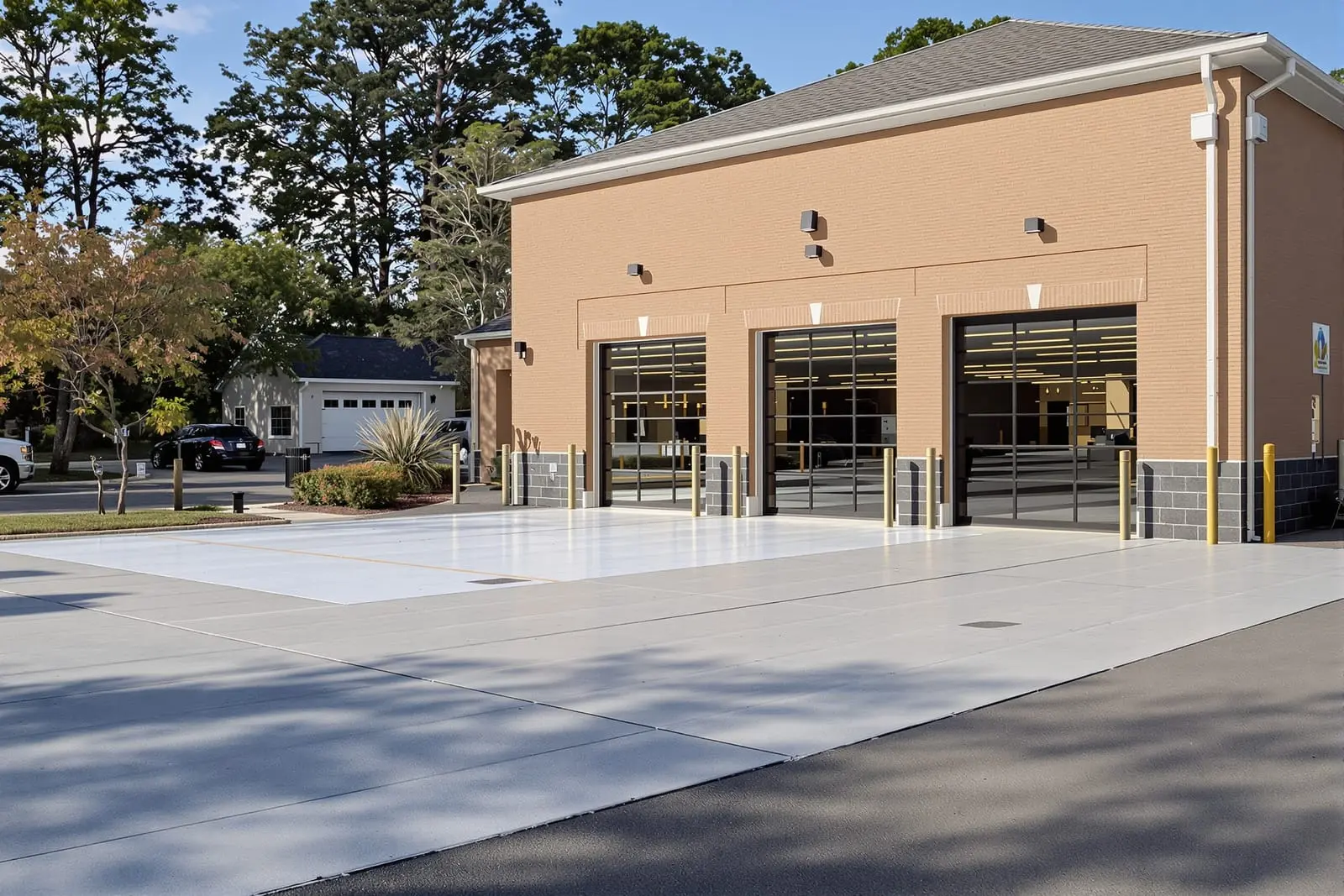
We build loading docks and commercial concrete slabs in Smyrna, TN for warehouses, retail stores, and industrial sites. Our heavy duty slabs are designed for truck traffic and point loads from dock equipment. We pour dock aprons, ramps, and service areas with proper reinforcement and drainage. Keep shipping and receiving running smoothly with durable concrete around your dock doors.
Primetime Concrete Smyrna provides professional commercial concrete slab throughout Smyrna, TN and the surrounding area. Our licensed, insured crew delivers safe, clean, on-time work with a free estimate before anything begins. Call (615) 903-0027 or request your free quote.
Loading Docks and Commercial Slabs Built for Smyrna Operations
Primetime Concrete Smyrna designs and installs commercial concrete slabs and loading docks that match the way your business actually works. Whether you are loading freight at an industrial park near Nissan, receiving pallets at a retail center on Sam Ridley, or upgrading the back dock of a local distributor, we look at your equipment, traffic patterns, and soil conditions before we ever set forms.
Commercial concrete slab work is not a one-size job. Forklift type, rack layout, trailer heights, turning radius for trucks, and even where water naturally drains on your lot all affect how we design your slab or dock. Our goal is not just to pour concrete. We want your new surface to perform for years without broken corners, standing water, or slab movement that slows your operation.
As a local Smyrna contractor, we know the typical red clay subgrade, how it reacts in wet winters and hot summers, and how TDOT truck traffic in the area affects loading dock design. That local knowledge helps us pick the right thickness, reinforcement, and joint layout so your investment holds up under real conditions, not just on paper.
How We Evaluate Your Site and Plan Your Commercial Slab
Every commercial concrete slab or loading dock in Smyrna starts with a site visit. A Primetime Concrete Smyrna project manager walks the area with you, looks at current cracking or settlement, and asks how you use the space. We measure slab square footage, check slopes with a level, and identify where trucks enter and exit so we can plan the most durable traffic paths.
Next, we investigate the subgrade. In many Smyrna locations, there is a thin layer of gravel over compacted clay. We probe or dig small test spots to see if there is old fill, construction debris, or soft pockets that must be removed. If your property is near low-lying spots or creeks, we are especially careful to check for moisture that can pump beneath slabs and cause pumping or faulting at joints.
With that information, we recommend slab thickness (often 6 to 8 inches for typical forklift traffic, more for heavy truck lanes), reinforcement type (rebar grid or welded wire mesh), and any special features such as thickened edges at dock doors or isolated pads for equipment. You get a clear sketch or layout, so you understand where joints, drains, and slopes will be before we start.
Designing Loading Docks That Match Your Fleet and Building
A good loading dock in Smyrna starts with the right height and approach angle. Primetime Concrete Smyrna measures your common trailers (dock-height vans, box trucks, or flatbeds) and tailgate style so we can set finished dock height correctly. For most standard trailers, docks are designed around 48 to 52 inches, but if you regularly use straight trucks or step decks, we adjust the design so your crews load safely without big gaps.
We look at your building wall and door openings to coordinate dock bumpers, dock levelers, and any seals you plan to use. The slab in front of the dock is shaped with a gentle slope down from the door to allow levelers to work properly and to keep water from running back toward the building. We typically design approaches with 4 to 6 percent slope, then fine tune based on your equipment and site drainage.
For busy warehouses, we often add thicker turning radiuses and reinforced wheel paths where truck tires repeatedly track. If you run forklifts with solid cushion tires or very heavy loads, we may recommend doweled construction joints and higher strength concrete so joint edges do not spall under traffic. These are the small details that separate a dock that looks good on day one from one that still works right years later.
Concrete Mixes, Reinforcement, and Slab Thickness Options
Commercial concrete slab performance is driven by mix design, reinforcement, thickness, and curing, not just how it looks when it is new. At Primetime Concrete Smyrna, we typically use 4,000 to 5,000 psi concrete for loading docks and high-traffic slabs. For areas that see frequent heavy truck loads or storage of dense materials like coil or stone, we may move to even higher strengths or adjust the aggregate blend.
Reinforcement options depend on use. Light-duty commercial pads may perform well with welded wire reinforcement, especially if the subgrade is solid and the slab is not exposed to constant heavy traffic. For shipping lanes, dock approaches, and forklift aisles, we usually recommend #4 rebar at a tight spacing in both directions, supported on chairs so it stays in the middle of the slab where it belongs. On projects where crack control is critical, we can also discuss fiber-reinforced mixes combined with rebar.
Thickness typically ranges from 5 inches for small commercial service areas up to 8 or more inches for truck courts and dock aprons. We may add thickened sections at dock edges, in front of dock pits, or under heavy storage racks. You will see these thickness changes on your plan and estimate, along with an explanation of why each area is engineered the way it is.
Step-by-Step: Our Commercial Slab and Loading Dock Installation Process
Once design is set, Primetime Concrete Smyrna handles the build with a clear sequence so your operations are disrupted as little as possible. First we saw cut and remove any existing concrete or asphalt, haul it off, and rough grade the area. We add or rework the base stone, usually a graded crushed stone compacted in layers to a target density, so your slab sits on a firm and uniform foundation.
Next, we set forms to the correct elevations and check slopes toward planned drains, parking lot gutters, or swales. If we are building a new loading dock face, we construct formwork for dock walls, steps, or ramps and install anchor bolts or embedded plates as needed for dock equipment. Then we place reinforcement per plan, tying rebar, setting dowels into existing slabs where needed, and supporting steel on chairs.
Concrete placement is scheduled with local weather in mind. In Smyrna, we often plan large pours for early mornings to avoid afternoon heat in summer, or midday in cooler seasons so the concrete has time to cure before nighttime lows. We place the mix, strike it off, vibrate around forms and rebar, and then finish it to the texture you need. For loading docks and exterior truck traffic areas, a broom finish is standard to provide traction in rain.
We cut control joints at the correct spacing and depth, either with early-entry saws the same day or with standard saws the next morning, depending on conditions. We then apply curing compound or use wet cure methods so the slab gains strength evenly. Barricades, cones, and caution tape are set up until the concrete reaches a safe strength for foot traffic, forklifts, and finally trucks.
Local Conditions, Scheduling, and Common Problems We Solve
Middle Tennessee weather creates unique challenges for commercial concrete slabs. Rapid temperature swings, freeze-thaw cycles, and heavy spring rains can all impact performance if not planned for. Primetime Concrete Smyrna schedules major exterior slab work during stretches of stable weather whenever possible, often in late spring or early fall when temperatures and moisture conditions are more predictable.
We plan drainage carefully because many Smyrna properties have low spots and clay soils that hold water. Poor drainage is one of the biggest reasons commercial slabs fail early. We add or adjust slopes, install trench or area drains when needed, and make sure water will not sit at dock doors or puddle in wheel paths.
For existing facilities, common problems include broken dock corners from trailers hitting concrete, wide cracks that collect water, and settled slabs that create trip hazards or misaligned dock levelers. Depending on severity and budget, we can remove and replace specific panels, install thicker reinforced aprons in problem zones, or reconstruct the dock face with better reinforcement details and bumpers. When we quote your project, we will explain what is causing the issue and what options you have to fix it, not just sell you a full replacement if it is not truly required.
Pricing, Permits, and What To Ask Before You Hire
Commercial concrete slab and loading dock costs in Smyrna are driven by thickness, total area, access for trucks and equipment, amount of demolition required, reinforcement choice, and any special features such as dock pits or trench drains. Tight sites behind existing buildings or jobs that require after-hours work to keep your operation running can also affect pricing, and we spell those factors out up front.
Primetime Concrete Smyrna helps you understand what is included. Your written proposal will note slab thickness, concrete strength, reinforcement layout, joint spacing, and finish type. If soil corrections, underdrains, or additional base stone may be needed, we flag those as potential items so there are fewer surprises.
Before you hire any contractor for a commercial concrete slab or loading dock, ask about their experience with similar loads and traffic, how they handle subgrade testing and compaction, what mix design they use for heavy-duty areas, and how long they recommend curing before forklifts and trucks use the slab. You should also confirm that they are familiar with local permitting and inspection processes for commercial projects in Smyrna and Rutherford County. We walk you through that process, coordinate with any required inspectors, and keep your facility team updated on schedule, access restrictions, and when you can safely return to full use of the area.
“
Professional loading docks & commercial slabs, done right the first time, quality materials, honest pricing, and results that last.
Primetime Concrete Smyrna
Loading Docks & Commercial Slabs Across Our Service Area