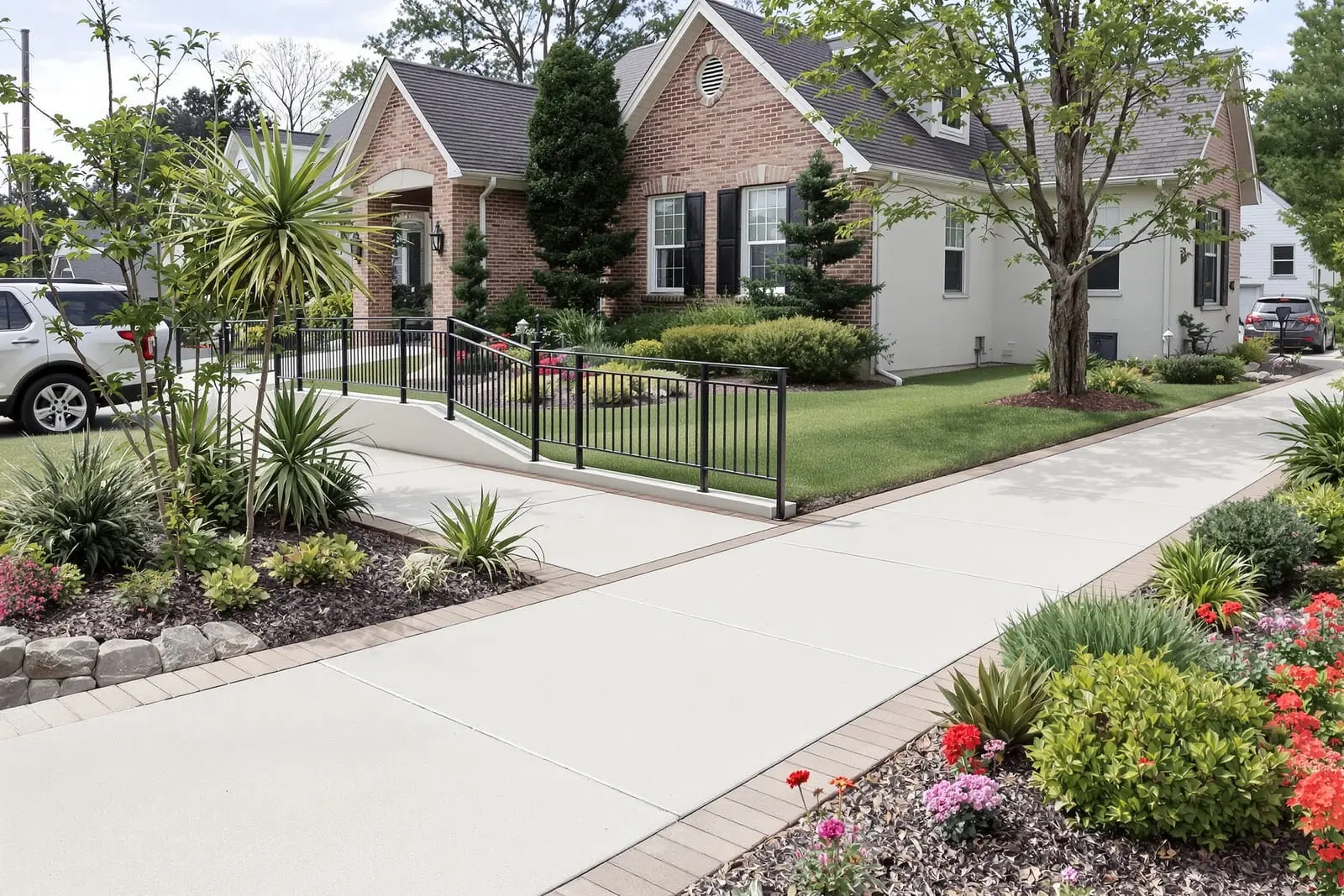
We install commercial sidewalks and ADA ramps in Smyrna, TN that meet accessibility codes and provide safe access for customers and staff. Our team pours smooth, properly sloped walks, ramps, and landings with detectable warning surfaces where required. We coordinate elevations with doors, parking, and curb lines. Improve compliance and convenience with well built concrete access routes.
Primetime Concrete Smyrna provides professional commercial sidewalk installation throughout Smyrna, TN and the surrounding area. Our licensed, insured crew delivers safe, clean, on-time work with a free estimate before anything begins. Call (615) 903-0027 or request your free quote.
Commercial Sidewalk Installation & ADA Ramps for Smyrna Businesses
Primetime Concrete Smyrna builds commercial sidewalks and ADA compliant ramps that handle real daily traffic in Smyrna, not just what looks good on a plan set. We focus on creating walkways that are safe, long lasting, and practical for customers, delivery drivers, and employees.
Our crews specialize in commercial sidewalk installation for retail centers, medical offices, churches, warehouses, schools, and municipal sites around Smyrna. We understand local codes, Tennessee Department of Transportation (TDOT) standards where they apply, and ADA slope, landing, and handrail requirements. You get concrete flatwork that passes inspection the first time and functions correctly in real use.
From replacing a few trip‑hazard panels at a strip mall to pouring new sidewalks around a full ground‑up development, Primetime Concrete Smyrna can handle layout, forming, reinforcing, pouring, and finishing in a way that minimizes downtime for your tenants and customers.
How We Plan Commercial Sidewalks & ADA Ramps in Smyrna
A successful commercial sidewalk installation starts before the first stake goes in the ground. We meet on site, walk the traffic paths, evaluate drainage, and review your civil drawings or site plan. For many Smyrna properties, especially along Sam Ridley and Enon Springs, the biggest issues are tight parking lots, shared drive entrances, and existing utilities very close to the walk.
We verify sidewalk widths, cross slopes, and ramp locations against ADA requirements. For example, an accessible route from parking to your main entrance must maintain a slope of 1:20 or less where it is considered a sidewalk, or 1:12 for ramp sections with proper landings. We also look at how delivery trucks turn, where water currently ponds after storms, and how snow removal equipment will scrape the concrete.
Based on this walk‑through, we may suggest adjusting grades, adding or moving catch basins, thickening concrete at dumpster pads or drive crossings, or upgrading to a more slip resistant finish in high traffic areas like medical office entrances. Our goal is to solve long term maintenance and safety issues before concrete is placed.
Our Installation Process Step by Step
Once the layout is finalized, Primetime Concrete Smyrna handles the full commercial sidewalk installation process from demo to final broom finish.
1. Demolition and removal: We sawcut existing sidewalks, ramps, and curbs so new work ties in cleanly. Old concrete and asphalt are hauled off to proper disposal or recycling. We coordinate this work to keep at least one safe path open where possible.
2. Excavation and subgrade prep: Middle Tennessee clay holds water and expands, which can cause heaving if the base is not handled correctly. We excavate to plan depth, compact the subgrade with plate tampers or rollers, and add crushed stone base where needed to improve drainage and support.
3. Forms and layout: We set steel or wood forms to precise elevations so your sidewalks meet door thresholds, adjacent pavement, and ADA ramp landings without lips or puddles. At ramp sections we carefully check slope with digital levels and string lines so field conditions match the drawings.
4. Reinforcement and joints: Depending on traffic, we may use welded wire mesh, rebar, or fiber reinforcement. Control joints are cut or tooled on a specific pattern to reduce random cracking, and we add dowels at connections to curbs, stairs, or slabs where load transfer is important.
5. Concrete placement and finishing: We typically place 4 to 6 inches of 3,500 to 4,000 psi air‑entrained concrete for sidewalks, thicker at drive crossovers or loading zones. Our finishers strike off, bull float, edge, and then apply a light to medium broom finish for traction. At ADA ramps we install truncated dome detectable warning mats set to exact locations and elevations.
6. Curing and protection: We apply curing compound or use wet cure methods as appropriate, then barricade the area to protect against early foot or vehicle traffic. Clear signage and tape keep pedestrians out until the concrete reaches safe strength.
Design Options, Finishes, and Local Considerations
Even with strict ADA and code requirements, there is room to match the look of your sidewalks and ramps to your building and brand. Primetime Concrete Smyrna offers several finish and design choices that still keep surfaces pedestrian safe.
For standard commercial sidewalk installation, a conventional broom finish is the most common and practical. However, on more visible projects like office parks or churches, we can add decorative borders, sawcut patterns, or light color variations using integral color or stains in areas that are not part of the required accessible path.
In Smyrna, freeze‑thaw cycles and deicing salts can be hard on exterior concrete. We recommend air‑entrained mixes, proper curing, and a breathable sealer on some installations to reduce surface scaling. Around heavy use entries we may tighten the broom texture slightly for added slip resistance, especially at medical or senior living facilities.
Other design details we discuss include curb ramps versus separate ramp structures, where to widen sidewalks near parking stalls for door clearances, and how to position handrails so they do not restrict snow removal or cart traffic.
ADA Ramp Compliance: Getting the Details Right
ADA ramps are not just about the visible slope. The details are what cause failed inspections, complaints, and injury claims. Primetime Concrete Smyrna is careful with these details so your project meets both the letter and the intent of the law.
We verify ramp slope (maximum 1:12), cross slope (maximum 1:48), landing size and flatness, and edge protection where drop‑offs are present. Landings are set flush at doors so there is no abrupt change at thresholds. Where handrails are required, we coordinate placement with your metal fabricator and set ramp edges to allow proper post installation.
Detectable warning surfaces (truncated domes) are aligned correctly at street crossings and vehicular ways, not randomly placed. We pay attention to transitions from sidewalk to asphalt or curb and gutter so wheelchair users are not faced with lips that catch casters. In sloped Smyrna sites, like some lots near Rock Springs Road, ramp and landing design often requires stepped runs and switchbacks to stay within allowed slopes. We work through those details with your design team to avoid field changes after concrete is formed.
What Affects Cost and Timeline for Commercial Sidewalk Installation
Every commercial sidewalk installation and ADA ramp project has different cost drivers. Understanding them helps you budget realistically and compare bids fairly.
Key cost factors include total square footage, sidewalk thickness, and whether the walk will carry vehicles such as at drive‑throughs or fire lanes. Heavier loads may require 6 inch or thicker slabs and more reinforcing, which adds concrete and labor.
Existing conditions matter. Tearing out thick, reinforced concrete, working around mature trees and root systems, or adjusting grades to fix long‑standing drainage issues increases time and equipment needs. Tight sites in older parts of Smyrna where access is limited or work must be phased around busy operating hours can also extend timelines.
Compliance items also carry cost. Proper detectable warning inserts, handrail coordination, additional landings, and tie‑ins to existing nonconforming walks often require extra forming and layout time. We provide line‑item proposals whenever possible so you see exactly what you are paying for instead of vague lump sums.
Weather in Middle Tennessee is another factor. We schedule pours to avoid extremes, protect fresh concrete in hot sun or cold snaps, and may recommend early morning placements in summer to minimize surface cracking and finish issues. All of this planning is built into our schedule discussions with you.
Commercial sidewalks and ADA ramps are liability‑heavy areas on any property. Trip hazards, ponding water, and noncompliant slopes can all lead to injuries, complaints, and forced rework. Primetime Concrete Smyrna focuses on getting these elements right the first time.
We are familiar with Smyrna building department expectations and typical inspection issues, so we can anticipate concerns about slopes, joint layouts, and tie‑ins to public right of way. Our crews are set up for commercial work, which means we show up with the manpower, saws, compactors, lasers, and finishing tools needed to complete phases quickly and cleanly.
Before final signoff, we walk the project, check joints, edges, and ramps, and mark any touch ups. You end up with sidewalks and ramps that function properly, look professional, and reduce your long term maintenance and safety risks. Whether you are managing one storefront on Almaville Road or an entire business park, Primetime Concrete Smyrna is ready to help you plan and execute your next commercial sidewalk installation or ADA ramp upgrade.
“
Professional commercial sidewalks & ada ramps, done right the first time, quality materials, honest pricing, and results that last.
Primetime Concrete Smyrna
Commercial Sidewalks & ADA Ramps Across Our Service Area