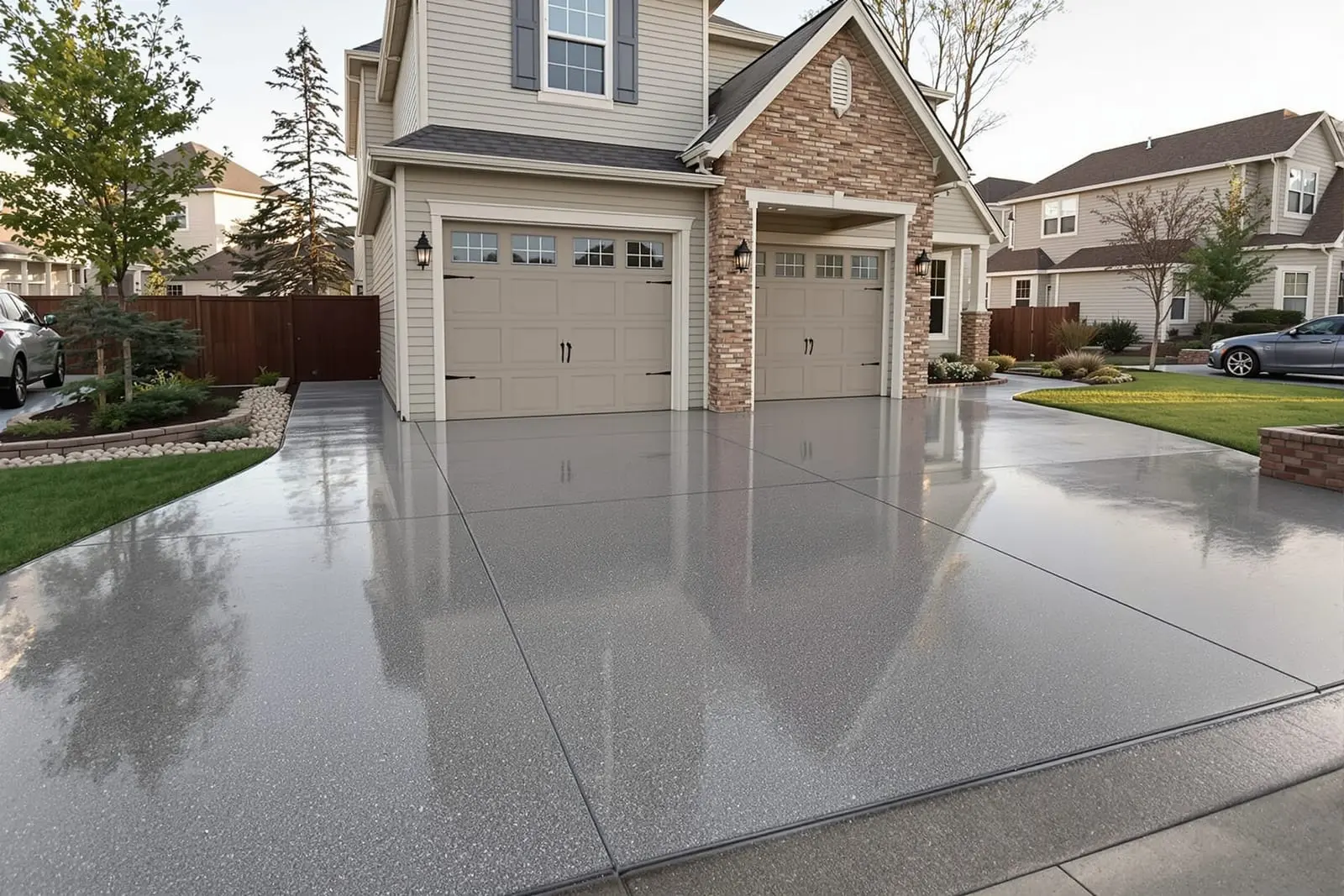
Upgrade your home with new concrete garage floor installation in Smyrna, TN. We pour smooth, durable slabs that stand up to vehicles, tools, and storage. For basements, we install level, crack resistant concrete floors ready for finishing or utility use. Request a quote for garage or basement concrete flooring today.
Primetime Concrete Smyrna provides professional concrete garage floor throughout Smyrna, TN and the surrounding area. Our licensed, insured crew delivers safe, clean, on-time work with a free estimate before anything begins. Call (615) 903-0027 or request your free quote.
Concrete garage floors built for real Smyrna use
A concrete garage floor in Smyrna has to do more than just look smooth. It has to handle vehicles, temperature swings, humidity, and the occasional oil spill without cracking apart. Primetime Concrete Smyrna focuses on getting that foundation right from the start, so you are not patching and redoing it in a few years.
When we look at your garage or basement, we start with what is already there. Is it bare soil, gravel, or a rough existing slab? Is there moisture coming through the ground? How high is the water table in your part of Smyrna? These answers decide how we prepare the base, what mix we use, and whether we include vapor barriers and drainage measures. For basements in particular, skipping that step is what leads to curling, damp spots, and musty smells later.
Middle Tennessee weather has its own quirks. Our summers are hot and humid, winters bring freeze and thaw cycles, and some lots in Smyrna see occasional groundwater pressure after heavy rain. All of this affects how a concrete garage floor or basement slab should be designed. Primetime Concrete Smyrna adjusts mix designs, curing methods, and joint layouts to suit these real local conditions, not a generic national standard.
How we install garage and basement concrete floors step by step
Primetime Concrete Smyrna follows a predictable process so you know what will happen and when.
1) Evaluation and measurement. We check access for trucks, ceiling height for basements, slab thickness needs, and any tie-ins to existing foundations or interior walls. We also check for signs of soil settlement and moisture issues.
2) Demo and excavation if needed. If you have an old cracked slab, we saw cut it into sections, break it up, and haul it off. For new floors, we excavate to the proper depth, usually to allow for 4 to 6 inches of concrete plus 4 to 6 inches of compacted stone.
3) Base prep and compaction. We install crushed stone or gravel, then compact it in layers. In Smyrna’s clay-heavy soils, this step keeps the slab from sinking or settling unevenly. For basements, a flat, compacted base also reduces moisture migration.
4) Vapor barrier and reinforcement. For basements and many garages, we install a heavy plastic vapor barrier over the stone to limit moisture coming through the slab. Then we place reinforcement, usually welded wire mesh or rebar grid, and sometimes synthetic fibers in the mix, to control cracking and help the slab carry vehicle loads and storage racks.
5) Forming and layout. We set concrete forms to establish floor height and slope. In garages, we typically slope the slab very slightly toward the overhead door or a floor drain so that water runs out, not toward the house or interior door.
6) Pouring and finishing. We pour the concrete, level it with screeds, then bull float to bring up paste and flatten the surface. After the initial set, we use power trowels or hand tools depending on the finish you want, from smooth trowel to a light broom texture for more slip resistance.
7) Joint cutting and curing. Control joints are cut with a saw to create planned weak points where hairline cracks can follow a straight line instead of wandering. We then apply curing methods that fit the season and weather, such as curing compound and scheduling pours at times of day that avoid rapid drying in hot Smyrna summers.
Concrete mix choices, thickness, and finish options
Not every concrete garage floor or basement slab should be the same. Primetime Concrete Smyrna selects mixes and thicknesses based on how you plan to use the space.
For standard residential garages holding one or two vehicles, we typically install a 4 inch thick slab using 3,500 to 4,000 psi concrete. For heavier usage, such as large trucks, workshops with machinery, or storage of equipment, we may increase thickness to 5 or 6 inches and step up the reinforcement pattern.
In basements, the focus usually shifts to comfort, moisture control, and finish. The concrete itself is similar, but we pay closer attention to vapor barriers, perimeter insulation if required by your remodel plan, and a finish that will accept flooring like vinyl planks, tile, or epoxy.
As for finishes, you can choose:
• Smooth troweled finish that works well under coatings and tile.
• Light broom finish in garages that need more traction when wet.
• Prepared surface for epoxy or polyaspartic coatings, with the right profile for good adhesion.
If you plan to use epoxies or other coatings in the future, we can adjust the finish and curing process so that the coating bonds correctly instead of peeling later. This coordination at the pour stage saves grinding and repair work down the road.
Cost factors for a concrete garage floor or basement slab in Smyrna
Concrete floor pricing can vary quite a bit, and understanding why helps you compare quotes fairly. Primetime Concrete Smyrna walks you through the main drivers before you commit.
1) Access and location. A backyard basement entrance down a narrow driveway often costs more to service than an open front-facing garage. If concrete has to be pumped instead of discharged directly from the truck, that adds equipment and labor.
2) Thickness and reinforcement. A simple 4 inch residential slab with wire mesh is one bracket. A 6 inch slab with rebar grid, higher psi concrete, and fiber reinforcement fits a different bracket. Your intended use decides what is appropriate.
3) Sub-base work. Some Smyrna lots already have decent gravel under old slabs, but many have soft clay or poorly compacted fill. Removing unsuitable soil, importing stone, and compacting in lifts is extra upfront cost that prevents expensive slab failures later.
4) Moisture and drainage solutions. Vapor barriers, perimeter drains, sump pits, and slope adjustments for garages all have costs, but they directly affect how dry and usable the floor will be in a few years. Basements near creeks or low-lying parts of town often benefit from additional measures.
5) Finish and coatings. A basic troweled surface is one level of cost. Custom saw cuts, decorative finishes, and epoxy or polyaspartic coatings add materials and time. We can quote these as options so you can phase upgrades if needed.
When Primetime Concrete Smyrna prices your concrete garage floor or basement, we itemize these elements so you are not guessing where the numbers came from.
Common problems with garage and basement slabs and how we avoid them
Most complaints people have about concrete garage floors and basements in Smyrna trace back to shortcuts in prep or timing, not the concrete itself. Primetime Concrete Smyrna focuses on preventing the issues we see most often.
Cracking and curling. All concrete cracks at some level, but random wide cracks and curling edges usually point to poor joints, improper reinforcement, or uneven moisture. We space and cut joints correctly, reinforce as needed, and keep slab thickness consistent to minimize these problems.
Moisture and efflorescence. White powder on the slab, damp spots, and floor coverings that fail are usually signs of vapor transmission. We address this with proper base compaction, vapor barriers, and drainage planning. For basements already showing moisture, we discuss whether additional waterproofing or drainage is needed before a new pour.
Surface scaling and spalling. When a slab surface peels or pits, it is often from finishing too early, using water on the surface, or exposing fresh concrete to freezing temperatures. In Middle Tennessee, timing pours to avoid sudden cold snaps and managing curing is key. We track weather forecasts and will reschedule rather than pour in marginal conditions that could ruin your floor.
Uneven or poorly sloped floors. Water that runs toward the interior door or pools in low spots is a preventable layout issue. During forming, we check slopes with levels and straightedges, especially in garages and walk-out basements, so drainage follows the plan instead of chance.
What to expect when you hire Primetime Concrete Smyrna
Before any work starts, we schedule a site visit to inspect the area, discuss how you use your garage or basement, and measure. You will receive a written proposal that breaks out prep, concrete placement, and any additional work such as drains or coatings.
During the job, you can expect some noise and dust, especially if we are removing an old slab. We contain debris, keep the site as orderly as the work allows, and coordinate concrete truck arrivals so your driveway and neighbors are disturbed as little as possible.
After the pour, the most important thing you can do is respect curing time. For a typical concrete garage floor, we generally recommend keeping vehicles off for at least 7 days, and heavier loads for 28 days while the concrete reaches most of its design strength. Foot traffic in basements is usually fine within 24 to 48 hours, depending on conditions and finish.
We walk you through care instructions, including when to install coatings or floor coverings, how to handle de-icing salts that can damage surfaces, and what level of hairline cracking is normal. If you want to phase improvements, such as adding epoxy later, we can plan the initial slab to make that future work smoother.
Primetime Concrete Smyrna focuses on doing concrete garage floors and basement slabs once, correctly, with clear expectations. You end up with a solid surface that matches how you actually use your space, not a generic slab that barely meets code.
“
Professional garage & basement concrete floors, done right the first time, quality materials, honest pricing, and results that last.
Primetime Concrete Smyrna
Garage & Basement Concrete Floors Across Our Service Area